Business plan · v0.4 AG-AI · EST. 2026

leafShift

Every litre justified. Every acre optimised.

The AI operating system for irrigation and fertigation. Mathematical confidence, no guesswork — physics first, machine learning second, every decision explainable.

Sections 02 – 07 Problem → Defensibility
About this document

Scope & honesty note. This document covers business-plan sections 2–7. LeafShift is the company described throughout. Where a field trial in Beja, Portugal is referenced, it is a separate applied-research project used as validation infrastructure — it demonstrates that our architecture works, it is not a paying customer. All performance figures from internal work are simulation results only: they show model behaviour under modelled conditions and have not yet been field-validated. We name what we have not proven in each section, on purpose.

02 · Problem

Growers have the data. They don't have the decision.

Medium-to-large growers have spent a decade buying sensors, irrigation controllers, and climate systems. Each one works. The trouble is they don't work together — and the person in the middle pays for it every day.

Irrigation runs on one logic. Climate runs on another. The weather forecast lives somewhere else again, and the grower's own experience fills the gaps. Someone has to pull all of that into a single daily decision by hand. When that decision is even slightly wrong, water goes where it wasn't needed, crops are stressed where they shouldn't be, and quality, energy, and labour costs all drift in the wrong direction — on the most valuable land on the farm.

A budgeted cost, not a sustainability slogan

It is tempting to say "agriculture wastes water." That is true, but it is too broad to act on, and no one has a line item for it. The sharper, more honest problem is this: the data already exists, but it does not become coordinated action. That gap is expensive in money the grower already counts — water, pumping and cooling energy, labour hours, and lost crop quality — which is what turns it from an environmental talking point into an operating cost a buyer will pay to remove.

Two facts show why irrigation decisions carry so much financial weight:

<20% / >54%
In the United States, irrigated land is under 20% of harvested cropland but produces more than 54% of all crop-sales value. A fifth of the land drives over half the value — so small irrigation gains move real money.
USDA Census of Agriculture, 2017
~50%
Saudi irrigation efficiency sits near 50%, against a global best practice of about 85%. Agriculture is 84% of national water use, more than 90% of it from non-renewable groundwater, on under 2% arable land, with roughly 80% of food imported.
FAO 2024 · Saudi MEWA

Three stages — and the third one is still a person

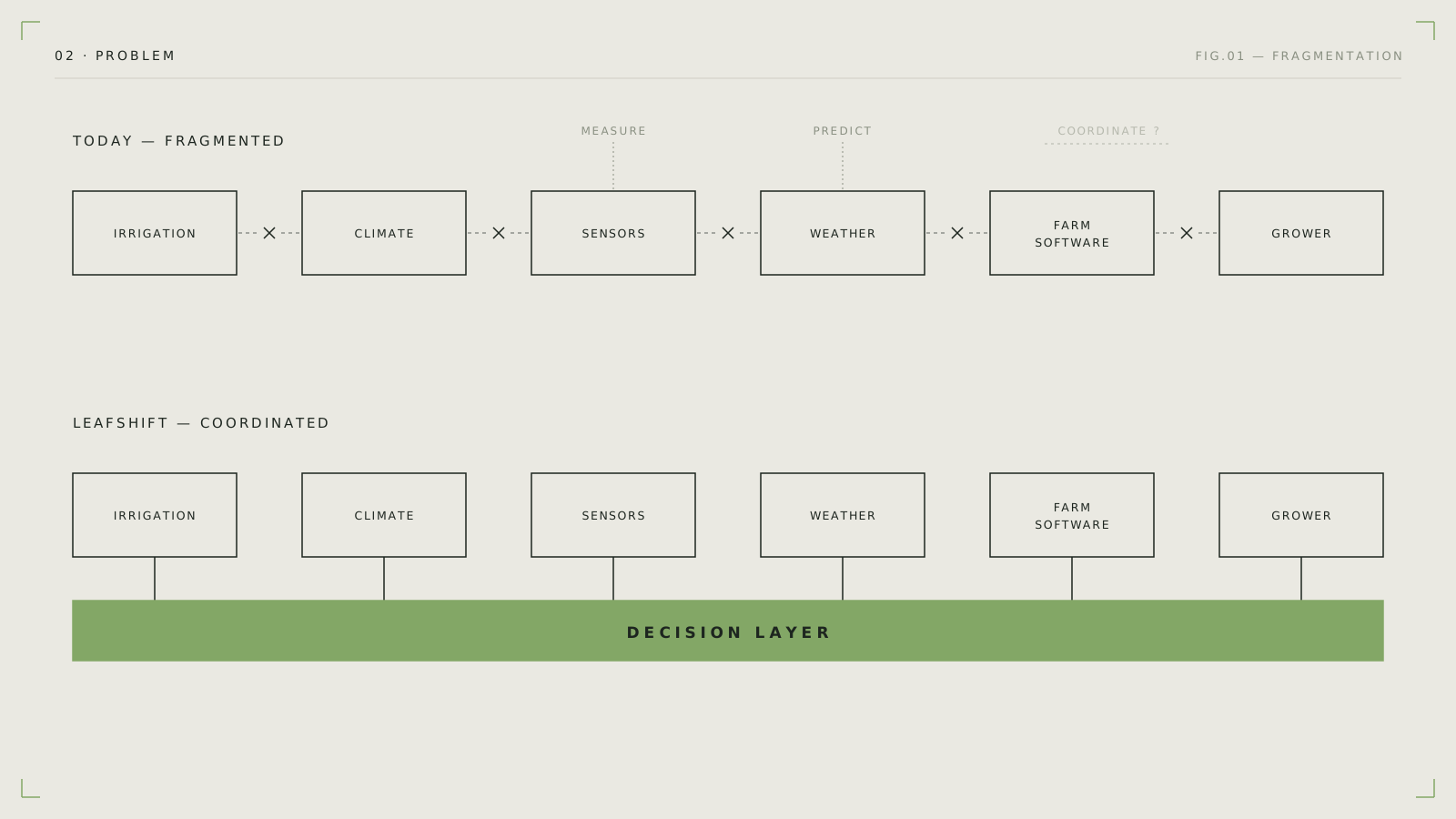
Every farm operating decision moves through three stages: measure what is happening, predict what is likely to happen, and coordinate the best combined action. Most installed systems do the first stage well. Some do the second. Almost none do the third consistently, across mixed equipment from different vendors. That third stage — turning many signals into one coordinated action — is the job still done by a human, inconsistently, and it is exactly the gap LeafShift fills.

The problem is not a missing sensor or a missing dashboard. It is the missing decision layer that turns existing data into coordinated action.

This is not just our view. PwC Middle East (2025) argues the central requirement in irrigation today is better integration across the operating system, not simply more technology. The U.S. Government Accountability Office (2024) found that the absence of common standards actively blocks interoperability between precision-agriculture tools. The pieces exist; the layer that makes them act as one does not.

Diagram: six disconnected farm systems on top with broken links and a missing 'coordinate' stage, versus the same systems unified by a single LeafShift decision layer below.
Fig. 01Today's stack measures and sometimes predicts, but the third stage — coordinating one action across mixed systems — is still manual. LeafShift is that missing layer.
What we have not proven yet

We have not yet shown, at a named customer, how often this problem bites, exactly how much it costs them, and how much they will pay to remove it. That evidence comes from discovery interviews and pilot baselines, and it must be gathered before any of these figures are presented as a market-wide fact.

03 · Target customer / ICP

One buyer first. Not "farmers."

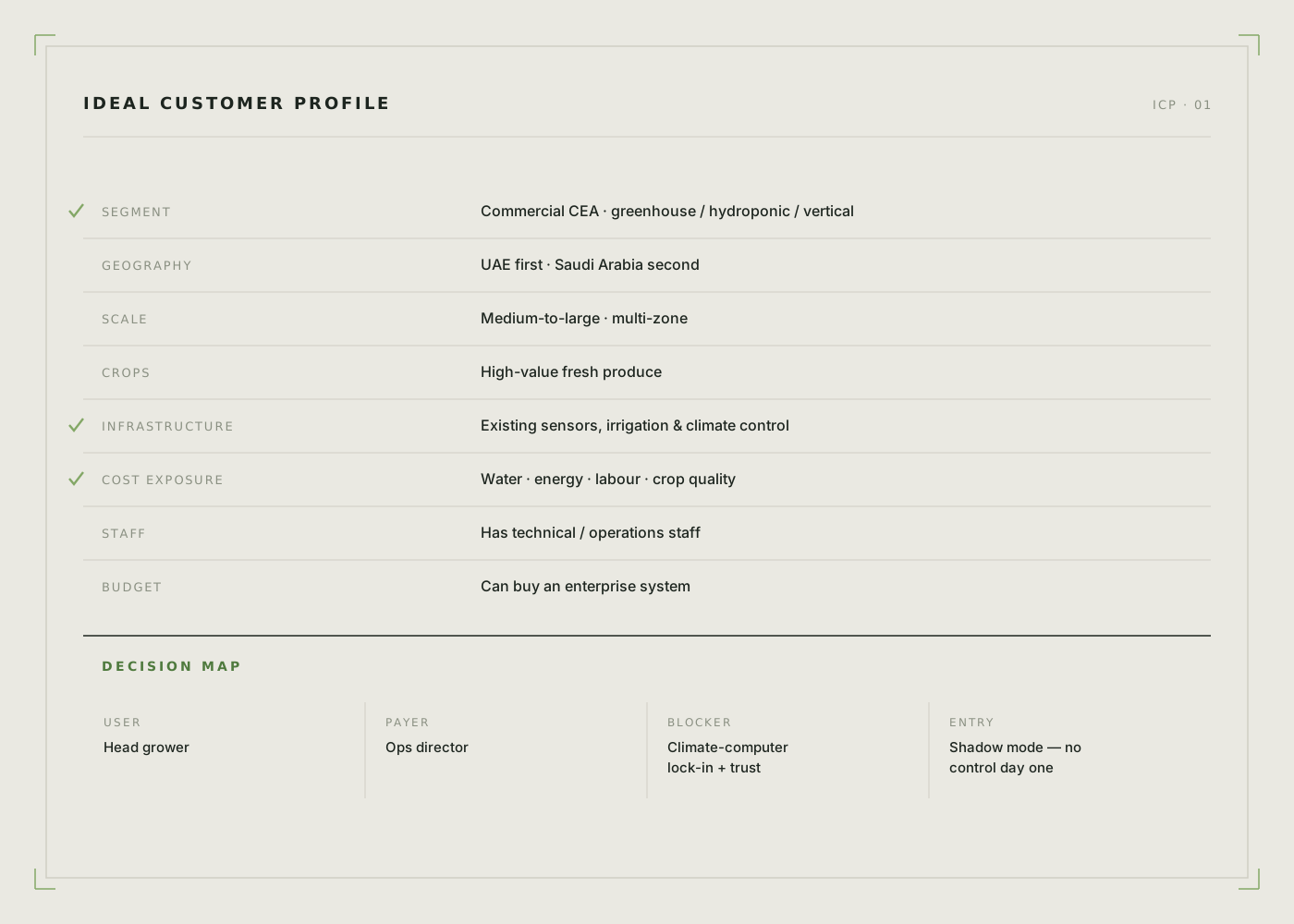
LeafShift's first customer is a specific operator, not an industry. It is a medium-to-large grower of high-value crops who already owns technical infrastructure, runs at a scale where coordination is genuinely hard, and has real money exposed to water, energy, labour, and crop quality.

Concretely, and to start: commercial greenhouse, hydroponic, and vertical-farming operators in the UAE and Saudi Arabia producing high-value fresh produce, who already run irrigation and climate systems. We go to the GCC first because that is where the operating problem is most intense and most funded, not because the region is generically "good for agtech."

Why this buyer — and not the farm that needs help most

LeafShift is a layer. It needs existing sensors, controllers, and data to coordinate. A low-tech farm has nothing to layer onto, so serving it would mean becoming a hardware installer first — which is slow, expensive, and destroys software margins. The operators we target have already done the hard part of buying and connecting equipment. We make that equipment finally act as one system.

The value also has to be large enough to clear an enterprise price, and that only happens where several costs stack up together. In UAE controlled-environment agriculture, cooling alone can account for 55–90% of a greenhouse's freshwater use (Fatnassi et al., 2023). That means water and energy decisions are physically linked — and coordinating exactly those linked decisions is what LeafShift does. So the value pool is the sum of water, energy, labour, and quality, not water alone.

Who signs, who uses, who pays, who blocks

Investors do not ask "who is the customer" so much as "who are the four people around the purchase." For LeafShift: the user is the head grower or operations manager; the payer is the operations director or owner; the blocker is usually the incumbent climate-computer relationship (the grower is locked into a Priva or Ridder system) plus a natural reluctance to trust an unproven system with control. Naming that blocker honestly — and designing around it with shadow mode and explainable decisions — is what makes this a real customer profile rather than a wish.

A datasheet-style Ideal Customer Profile card listing segment, geography, scale, crops, infrastructure, cost exposure, staff and budget, with a decision map of user, payer, blocker and entry point.
Fig. 02The first customer as a datasheet: who they are, what they already own, what it costs them — and who signs, uses, pays, and blocks.
What we have not proven yet

We have not yet validated which sub-segment — greenhouse, vertical, or high-value open-field irrigated — converts fastest and pays most. We will set that priority from discovery interviews, and we will resist widening the target until one beachhead is working.

04 · Market size

Sized from the bottom up, not from a report.

The category is large and growing — but a headline number copied from an industry report does not answer the question an investor actually has: how many real accounts can we reach, and what is each one worth? So we size from the bottom up and use the published figures only to confirm the category is venture-scale.

The category, for direction only

Independent estimates of the global precision-irrigation market cluster around US$5–9 billion in 2024–25, growing to roughly US$10–29 billion by 2033–35, at a high-single to low-double-digit annual growth rate. The research houses disagree on the exact numbers, which we show honestly rather than cherry-picking the largest. The relevant point is directional: this is a real, growing, multi-billion category — a ceiling worth aiming at, not a target we can claim.

There is also a specific regional tailwind. Saudi Arabia attracted over US$9.8 billion in private-sector investment into sustainable agriculture and food projects in 2024, under Vision 2030 — capital actively flowing toward exactly the modernisation LeafShift supports.

How we actually size it

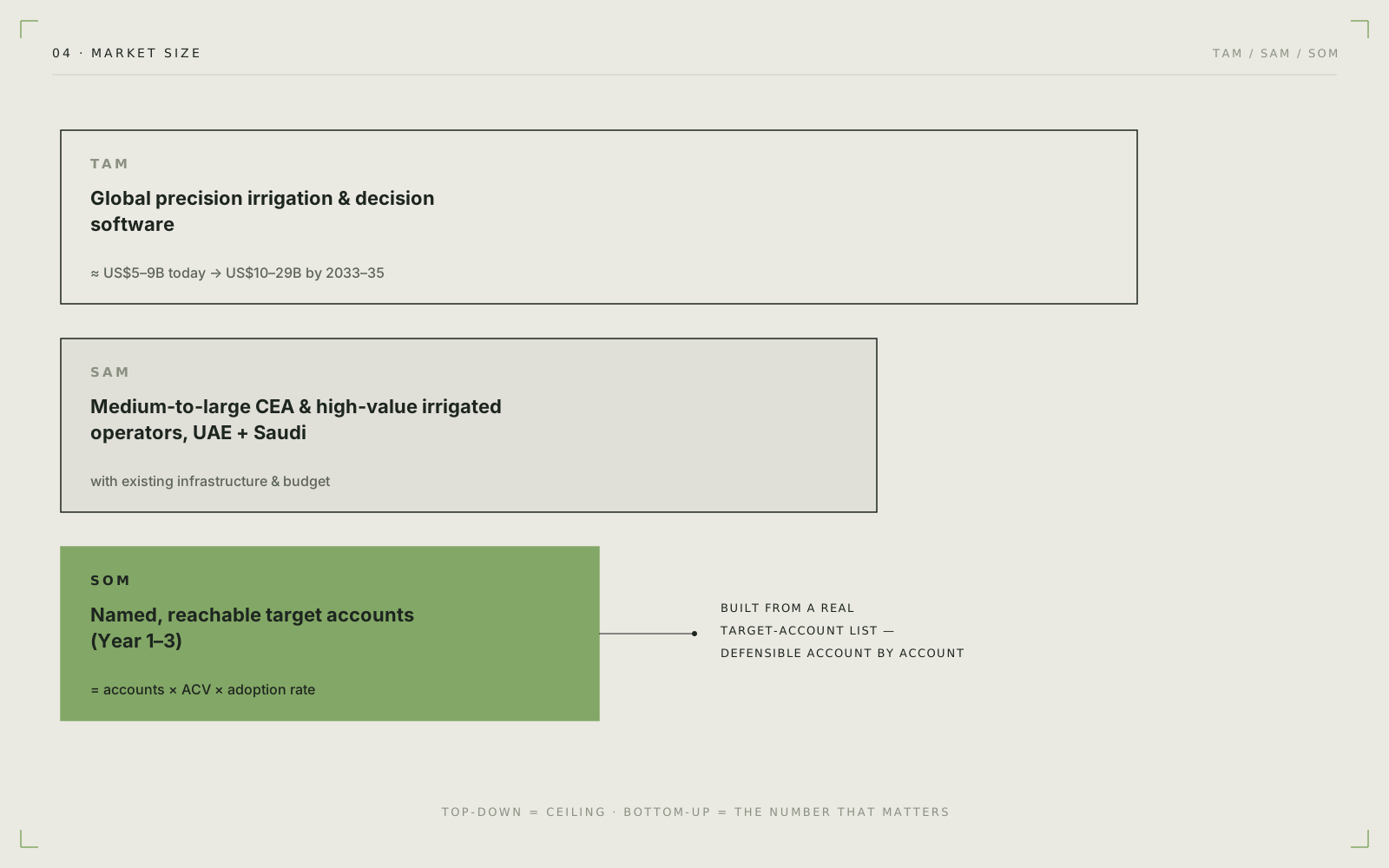
We use a standard three-layer model, but we build the bottom layer from a real list, not a percentage of a report:

A three-band TAM, SAM, SOM diagram where the smallest serviceable-obtainable-market band is highlighted in moss green and annotated as built from a real target-account list.
Fig. 03The billions are the ceiling. The number that matters is the bottom band: named accounts × realistic contract value × a realistic adoption rate.

In words: the TAM is the global precision-irrigation and decision-software category above. The SAM is the slice of that we can actually serve at entry — medium-to-large CEA and high-value irrigated operators in the UAE and Saudi Arabia who have the infrastructure and budget to buy. The SOM is a countable list of those operators, multiplied by a realistic annual contract value (an implementation fee plus a subscription priced by managed area or number of zones), multiplied by a realistic multi-year adoption rate. Because the SOM is built from a named target-account list — the same 80–100 accounts we work in go-to-market — every euro in it can be defended account by account, which is exactly what an investor wants to test.

What we have not proven yet

We are still building the account count and confirming a defensible contract value through early conversations. Until that list is complete, the SOM is presented as a transparent method with clearly-flagged placeholder numbers — never as a fabricated total.

05 · Market timing

The infrastructure finally exists. The decision layer doesn't.

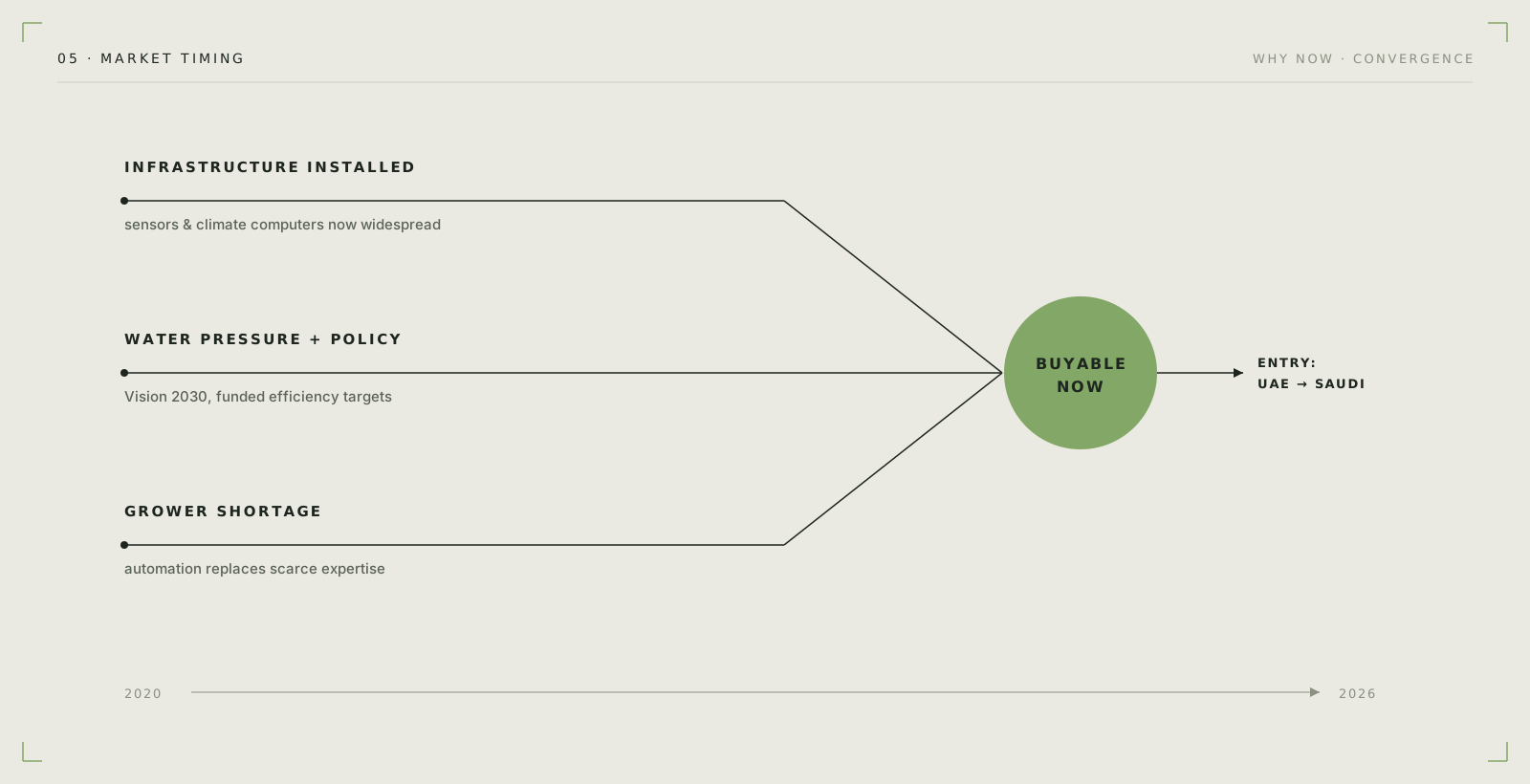
"AI is growing" is not a reason for a grower to buy. The real reason LeafShift is buyable now is simpler: growers have already installed the sensors, controllers, and climate computers. The foundation is in the ground. The only missing piece is the layer that turns it into coordinated decisions — and the pressure to add that layer is peaking at the same moment.

Three forces are arriving together, and each one is evidenced rather than asserted:

1 · The infrastructure is already installed

This is the quiet but decisive shift. Autonomous-growing software from Blue Radix already runs in 100 greenhouses across 17 countries, and Priva — whose climate computers LeafShift would sit alongside — operates in more than 100 countries with over 450 installation partners. The hardware and data layer we build on top of is now widespread. Five years ago the substrate for a decision layer barely existed; today it is everywhere our buyer operates.

2 · Water pressure is acute and funded

In the GCC this is not a future risk, it is a present, budgeted priority. Saudi Vision 2030 and the National Water Strategy make irrigation efficiency a national goal; the FAO and the Saudi Irrigation Organization had established 21 demonstration farms across the Kingdom by mid-2024; and precision systems are already cutting in-region water use by 20–60%. The buyers are actively modernising right now, with public money behind them.

3 · The expert grower is scarce

The whole autonomous-growing category is driven by the shortage of skilled, experienced growers — automation lets one grower manage several times more area. That scarcity is what turns a "nice optimisation" into an "operational necessity": when you cannot hire another expert, software that captures and scales expert decisions stops being optional.

The buyer already has the infrastructure, the budget, the pain, and no one to hire. All four are true now — and weren't five years ago.

Sequence: UAE first, Saudi second

We enter the UAE first because it is the denser controlled-environment and agritech hub, which means more target accounts close together and faster pilots. Saudi Arabia follows because its irrigation-modernisation programme is larger in scale — bigger contracts, but a longer sales cycle. The order is deliberate: prove the motion where it is fastest, then scale it where it is biggest.

A convergence diagram showing three forces — installed infrastructure, funded water pressure, and grower scarcity — meeting at a single 'buyable now' point, with entry sequenced UAE then Saudi.
Fig. 04Why now is not "AI is growing." It is three independent forces — installed kit, funded water pressure, and expert scarcity — lining up at the same moment.
06 · Product & solution

An operating system for the irrigation decision.

LeafShift connects to the sensors, controllers, weather, and crop data a grower already has; builds a live operating picture of the farm; forecasts where water stress and waste are about to happen; and then recommends — or, once trusted, executes — the irrigation and fertigation actions. It replaces guesswork with a hybrid model: physics first, machine learning second, every decision explainable.

What the customer actually experiences — five stages

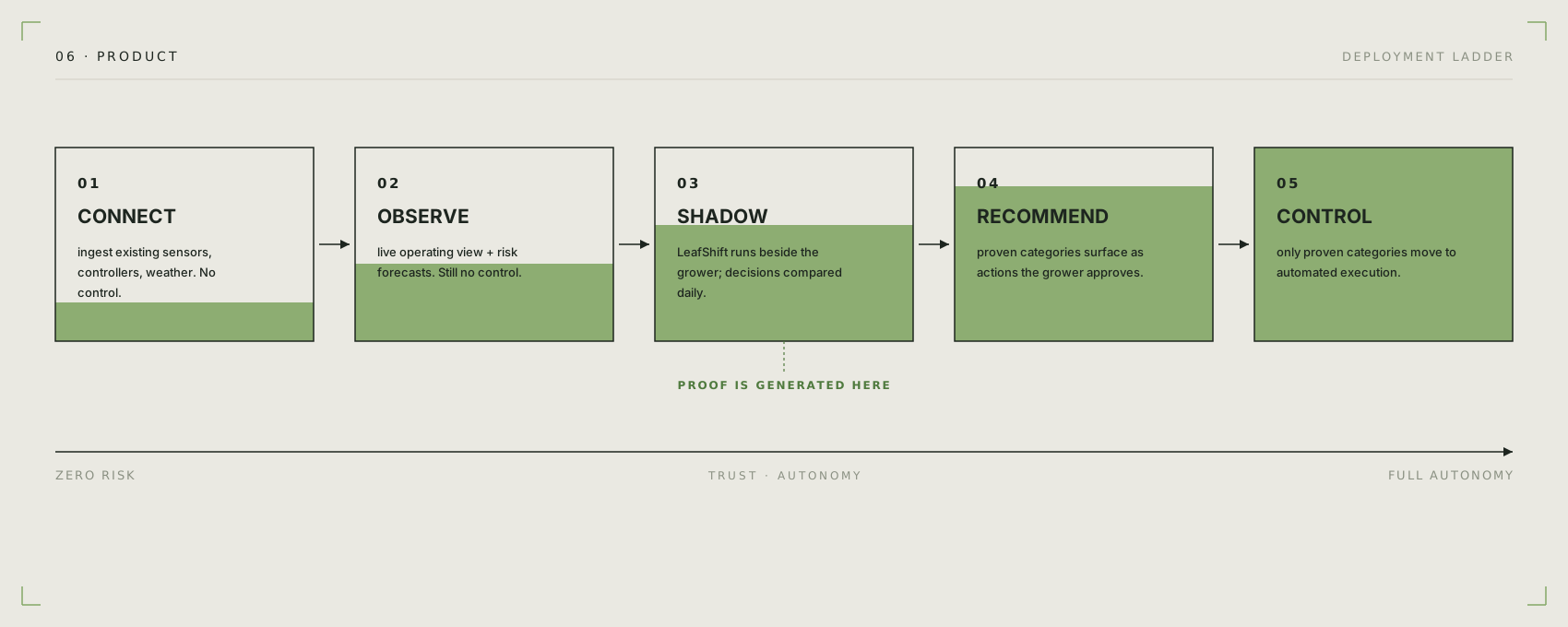
We do not ask a grower to hand over control on day one. The product earns trust in steps, and each step produces the proof needed for the next:

A five-step deployment ladder from Connect to Observe to Shadow to Recommend to Control, with a growing moss-green fill indicating increasing autonomy and a 'zero risk to full autonomy' axis.
Fig. 05Trust is earned in steps. Shadow mode (stage 3) is where the comparative proof is generated, at zero operational risk, before any control is handed over.

Through all five stages the grower can always see why a decision was made. The physics baseline is explainable by its nature, and the machine-learning adjustment on top is attributed — you can see how much each factor contributed. That transparency is what earns a grower's trust, and it also keeps us aligned with European expectations on explainable AI from the start, rather than retrofitting it later.

Not autonomous on day one — on purpose

Handing full control to an unproven system would be a trust and liability mistake, and growers know it. Shadow mode solves this: LeafShift's recommendations run quietly alongside the grower's real decisions, so the farm keeps running exactly as before while we accumulate a daily, side-by-side record of which system would have done better. That record is both the sales proof and the raw material for the data moat described in the next section.

This is not just a slide — the core already runs

The architecture is not theoretical. In a separate applied-research project on a food bed in Beja, Portugal, we have already built and run the core LeafShift pattern in working software: a physics baseline (the FAO-56 crop-water-balance standard, implemented with a peer-reviewed, open-source library maintained by the USDA) plus a bounded machine-learning correction that learns each zone's local quirks and is capped so it can only ever adjust the physics by a small, safe amount. In a full-season simulation, that correction tracked soil moisture to well within sensor accuracy. This proves the architecture works end to end. It is validation infrastructure, not a customer deployment — and the numbers it produces are simulation results, not field-proven performance.

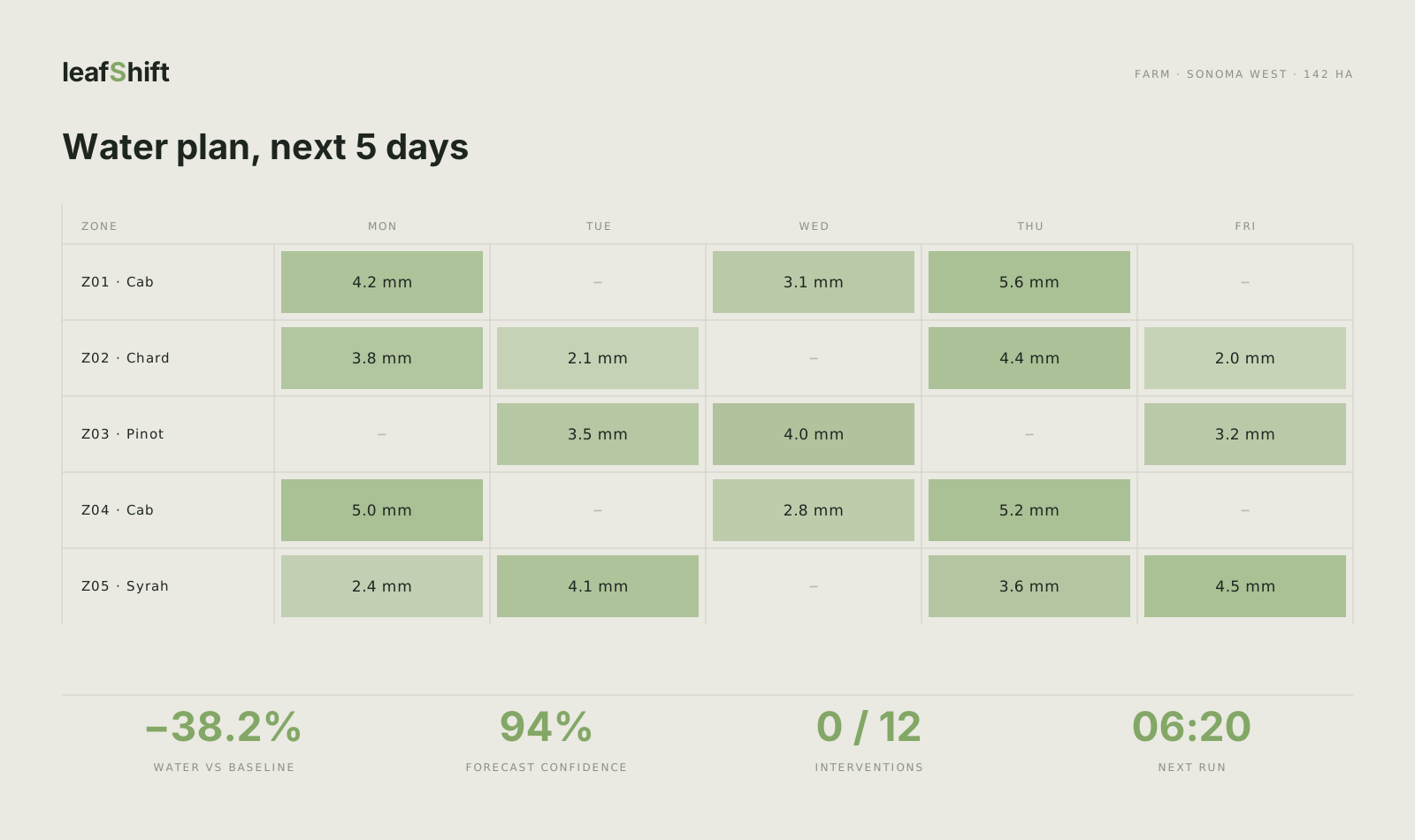
The LeafShift grower dashboard: a 'Water plan, next 5 days' heatmap table across five vineyard zones, with bottom stats for water saved, forecast confidence, interventions and next run time.
Fig. 06What the grower sees: a per-zone water plan for the days ahead, with a clear running tally. Note — the figures shown are illustrative / simulated, not field-validated.
What we have not proven yet

The Beja work proves the irrigation pattern on one bed in simulation. It does not yet prove LeafShift coordinating climate, energy, and irrigation together on a live commercial greenhouse, nor does it prove the saved-water and yield figures in the field. We distinguish clearly between the validated pattern (a bounded physics-plus-ML irrigation decision) and the designed extension (multi-resource coordination at commercial scale).

07 · Technology & defensibility

The moat is the data loop, not the algorithm.

LeafShift's architecture is deliberately built on public, peer-reviewed foundations — and that is a strength, not a weakness. Our defensibility does not come from a secret equation. It comes from a loop that compounds with every deployment.

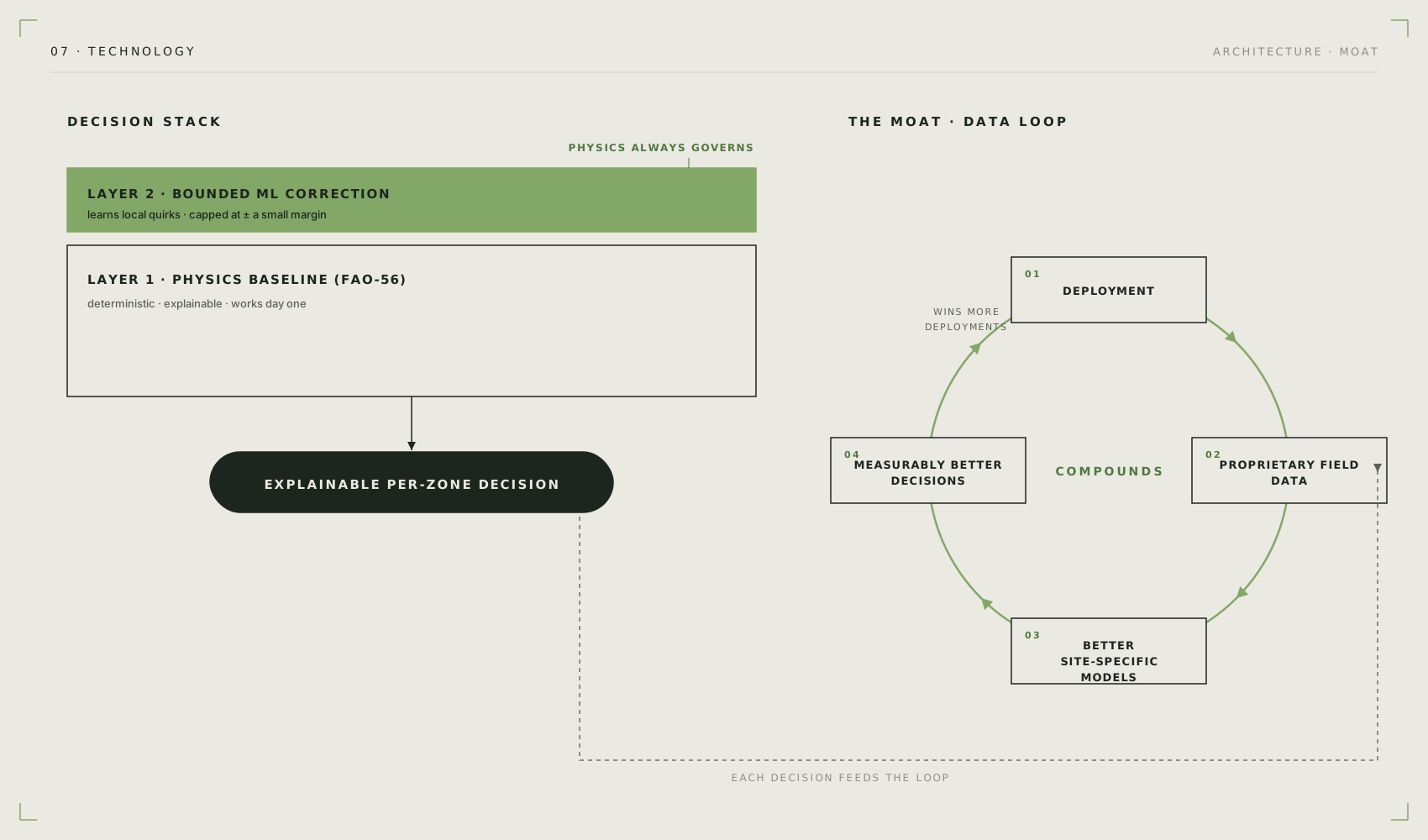
The loop is simple to state: every deployment produces proprietary field data; that data trains better, site-specific corrections; those produce measurably better decisions; better decisions win more deployments; and more deployments produce more data. The technology is the machine that turns customers into a performance advantage — it is the means to the moat, not the moat itself.

Two layers: physics first, then a bounded learner

The system has two layers, in a strict order. Layer one is a deterministic agronomic baseline — the FAO-56 crop-water-balance standard used by irrigation engineers worldwide. It calculates what each zone needs from first principles. It is transparent, explainable, and works on day one with no training data at all. Layer two is a machine-learning correction that learns the things the physics cannot know in advance: a particular bed's microclimate, a sensor that drifts, a neighbouring crop that shades it. Crucially, this correction is bounded — it can only nudge the baseline by a small, capped amount — and it is explainable, so every adjustment can be attributed. Physics always governs; the learner refines.

This ordering is the whole point. A pure "black box" that simply outputs an irrigation command is hard to trust, hard to audit, and a regulatory problem. A transparent physics baseline with a small, bounded, explained correction is trustworthy, auditable, and aligned with EU AI Act expectations by construction.

Left: a two-layer decision stack with a physics baseline and a bounded ML correction producing an explainable per-zone decision. Right: a four-node data-loop flywheel where deployments produce data that improves models and wins more deployments.
Fig. 07Left: physics governs, the learner refines, every decision is explainable. Right: each decision feeds a loop that makes the next deployment better and harder to displace.

What is actually defensible — in order

We are honest about what is and isn't proprietary, because an investor will probe exactly here. The physics standard, the open-source library, and the machine-learning method are all public — and we say so proudly, because that is what makes the system explainable and trustworthy. The defensibility sits in four places, strongest first:

1 · The proprietary field-data loop. This is the same moat the serious incumbents actually have — their advantage is years of field data, not a secret algorithm. Ours is captured from day one through shadow-mode logging, drift detection, and continuous retraining, so the architecture is designed to accrue the moat rather than hope for it.

2 · Vendor-neutrality. The leading autonomous-growing products are tied to specific climate computers. A layer that coordinates across mixed infrastructure from different vendors — and picks the best goal per site, whether that is saving water, saving fertiliser, or deliberately stressing a crop to improve quality — is a structurally different and broader position.

3 · Deployment learning and workflow lock-in. The playbooks for installing, calibrating, and integrating into a grower's daily workflow become repeatable assets, and once LeafShift is the decision layer a grower trusts, the switching cost is high.

4 · Explainability as a regulatory moat. As connected, AI-driven control comes under closer regulatory scrutiny in Europe and elsewhere, a transparent, bounded, attributable system is compliant where a black box is not.
What we have not proven yet

The data loop is a future moat. Today we have one system's worth of simulated data, not a fleet's worth of field data. The defensibility described here is a well-grounded thesis about what this architecture will accumulate as it deploys — and we present it as exactly that, not as an advantage we already hold.